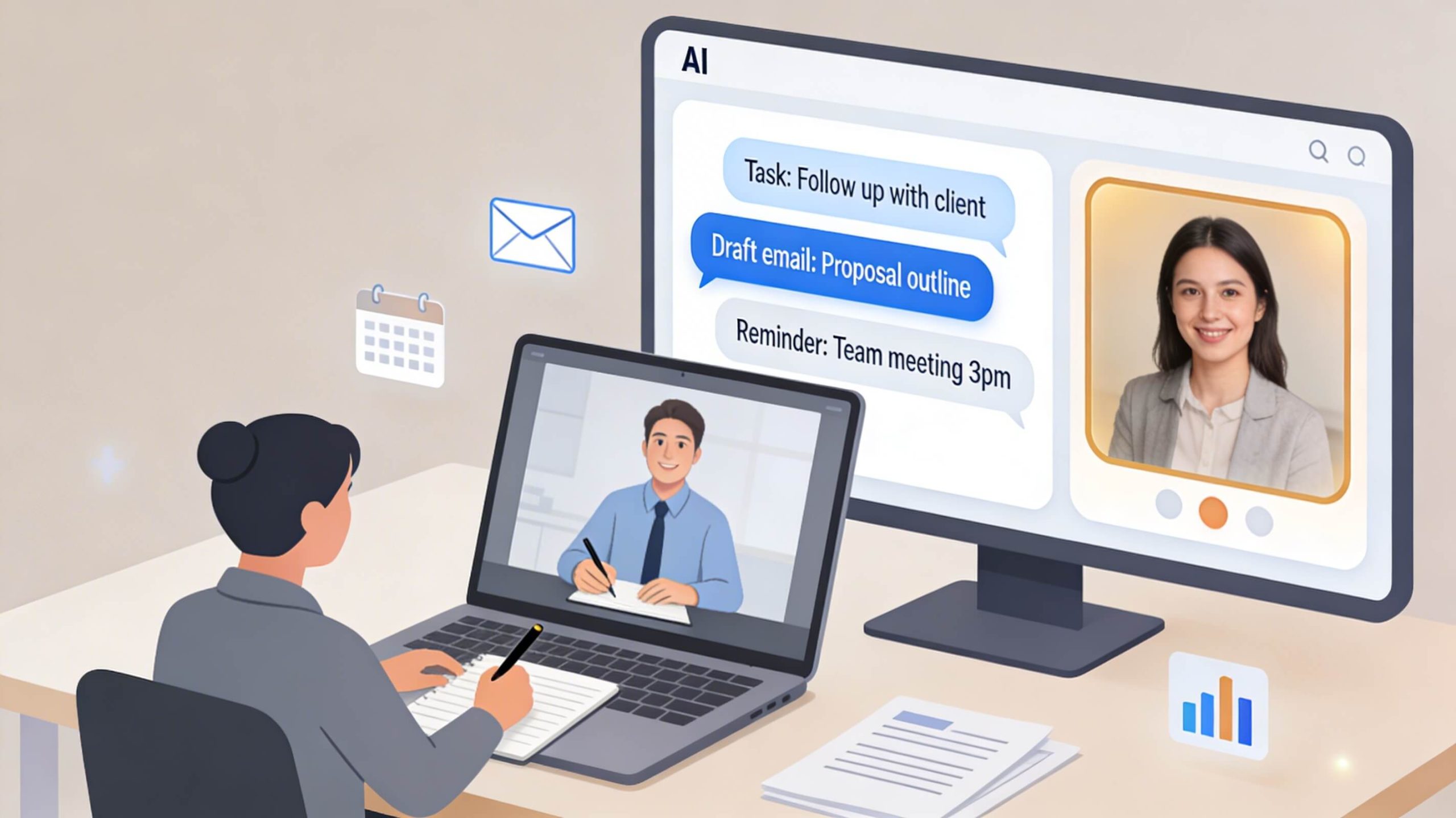
Small business owners are under pressure to do more with less time: manage clients, marketing, operations, and admin—all at once. AI tools and human virtual assistants working together can completely change how you run your business, combining smart automation with human judgment and relationship skills.
Instead of seeing AI as a replacement for people, the most successful companies use it to empower their teams and give their virtual assistants superpowers.
Why AI Alone Is Not Enough
AI is great at processing information, generating content, and automating repetitive tasks, but it still lacks context, empathy, and true business ownership. It can draft an email, but it won’t understand the history of your relationship with a specific client the way a dedicated assistant does.
That’s where a professional virtual assistant comes in:
- They understand your brand voice, priorities, and boundaries.
- They make judgment calls that AI can’t safely make on its own.
- They protect you from errors by reviewing and polishing AI outputs.
When you combine both, you get speed from AI and quality from your assistant.
Division of Roles: Who Does What?
Think of AI and a virtual assistant as a two‑person team with different strengths.
AI can handle:
- Drafting routine emails, replies, and templates.
- Summarizing meetings, documents, and long messages.
- Generating content ideas, outlines, and first drafts for blogs, posts, and newsletters.
- Extracting data from invoices, forms, and PDFs into usable formats.
- Suggesting schedules, reminders, and task prioritization.
Your virtual assistant can handle:
- Reviewing and personalizing AI‑generated content so it sounds like you.
- Managing your inbox, calendar, and follow‑ups with human tact and discretion.
- Coordinating with clients, contractors, and vendors in real time.
- Building and maintaining SOPs, checklists, and systems that AI then supports.
- Deciding what should be automated, what needs a human touch, and what needs your direct attention.
Together, they create a smooth, scalable workflow instead of a patchwork of disconnected tools.
Everyday Workflows: How This Looks in Practice
Here are a few concrete examples of how AI and a virtual assistant can run your day behind the scenes.
- Inbox and communication
- AI drafts quick responses to common questions (pricing, availability, basic support).
- Your virtual assistant reviews, edits, and sends them, escalating only the messages that truly need your input.
- Content and marketing
- AI proposes content ideas and drafts for blog posts, newsletters, and social media.
- Your assistant adapts them to your brand, adds offers or CTAs, schedules posts, and monitors engagement.
- Admin and operations
- AI extracts key info from contracts, invoices, or forms and updates spreadsheets or your CRM.
- Your assistant checks accuracy, tracks deadlines, and communicates with clients or providers when something is missing or off.
- Meetings and follow‑up
- AI transcribes and summarizes calls or meetings, highlighting action items and deadlines.
- Your assistant turns those into tasks, updates your project tools, and follows up with everyone involved.
This combination eliminates dozens of small manual steps every day while keeping a human in control of quality and relationships.
Benefits for Small and Growing Businesses
When you pair AI with a skilled virtual assistant, you get advantages that used to be available only to larger teams.
Key benefits include:
- More time for strategy and sales: Less time writing emails and doing admin means more time closing deals and improving your services.
- Faster response times: AI + VA systems can answer routine questions quickly while still escalating complex or sensitive topics to you.
- Consistent client experience: Templates, AI drafts, and assistant oversight ensure your brand voice stays consistent, even as you grow.
- Better decisions: AI‑powered analytics plus a VA who understands your goals means your reports turn into real actions.
For many small business owners, this is the difference between “barely keeping up” and having a business that runs smoothly even when they step away.
How to Get Started With AI + Virtual Assistants
If you’re new to this, you don’t need a full tech stack from day one. Start small and build.
A simple starting plan:
- Identify 2–3 tasks that drain your time every week (e.g., inbox, scheduling, content drafts).
- Introduce AI to support those tasks, and have your virtual assistant manage and refine the outputs.
- Document what works well, then expand into more areas like reporting, client onboarding, or marketing campaigns.
Over time, your AI tools and your assistant will develop a rhythm together, turning your daily operations into a streamlined, scalable system that feels like you hired an entire back‑office team—without the overhead.